
MGP10 and MGP12 are timber grades
MGP means machine-graded pine. MGP10 and MGP12 describe grades with different structural properties. They do not describe the timber’s size or treatment. Choose the grade shown in the design, then check the rest of the product details.
What changes with the grade?
WoodSolutions’ in-grade testing guide explains how tested pine properties form the MGP grades. Strength describes resistance to failure. Stiffness describes how much timber bends under load. Both matter in a frame.
MGP12 is a higher grade, but it does not promise a fixed increase in span. A member may be limited by bending, deflection or another part of the design. Do not multiply a span by the ratio of the grade numbers.
| Check | MGP10 | MGP12 |
|---|---|---|
| Strength grade | Match the MGP10 design entry | Match the MGP12 design entry |
| Section size | Read the size on the plan | Read the size on the plan |
| Treatment | Check the separate product mark | Check the separate product mark |
| Permitted span | Depends on the whole design case | Depends on the whole design case |
A grade choice is not a choice of timber size. Nor is it proof of outdoor or ground-contact suitability.
Read the mark, not the paint colour
WoodSolutions’ grading guide describes machine grading and grade marks. Use the mark and supplier records to identify the grade. Appearance alone is not a reliable check. An F-grade is a different grade designation; do not invent an MGP equivalent from its number.
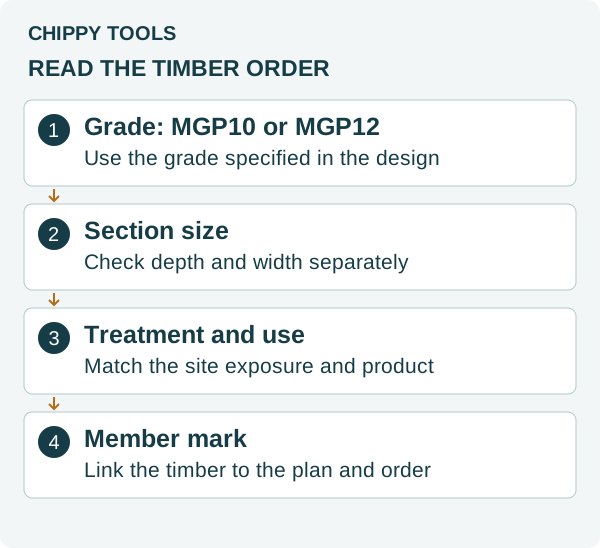
Chippy Tools timber-label checklist. Grade context: WoodSolutions machine grading and in-grade testing guides. Labels are not a span table.
Check a proposed swap
Suppose the plan lists MGP12 and the delivery contains MGP10. Set the mismatch aside and ask the supplier to resolve it. Send a photo of the grade mark and the plan item. Do not install it on the basis that the dimensions match.
The reverse swap still needs a check. A pack of MGP12 could have a different section or treatment from the specified MGP10 product. Ask the designer to accept the full product change. Keep the response with the order.
Make the timber order easy to check
Record the member mark, grade, section, length, treatment and quantity on one line. Keep the supplier’s product code alongside them. Check the docket and timber marks at delivery. Raise missing or unclear marks before cutting the stock.
Use the AS 1684 input guide when comparing a design entry. For Queensland work, also check the species guide. The Chippy Tools code-check sheet gives you a place to record the reference and open questions.
Sources
Publisher links identify the standards. This review did not inspect or reproduce their licensed span tables.
Related building rules
More Australia rules